Scrum software product teams are now welcoming AI agents as integral members. Inspired by Professors Nonaka and Takeuchi’s knowledge creation theory, which articulates the transformation between tacit and explicit knowledge within “Ba” (a shared context), here’s how this “Phronetic Team with AI“ works. This is also inspired by Prof. Jeff Sutherland’s recent works on Scrum Sage .
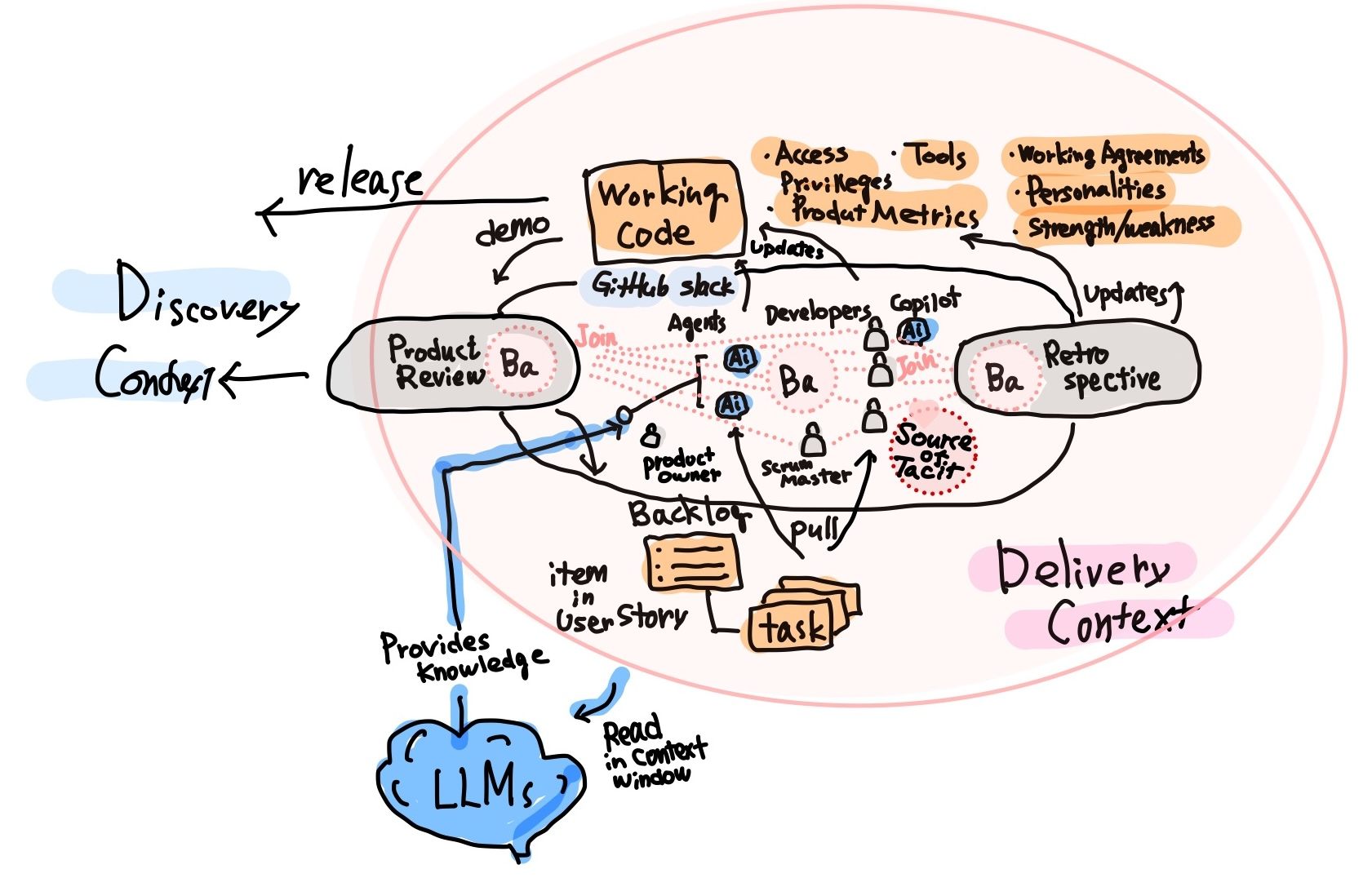
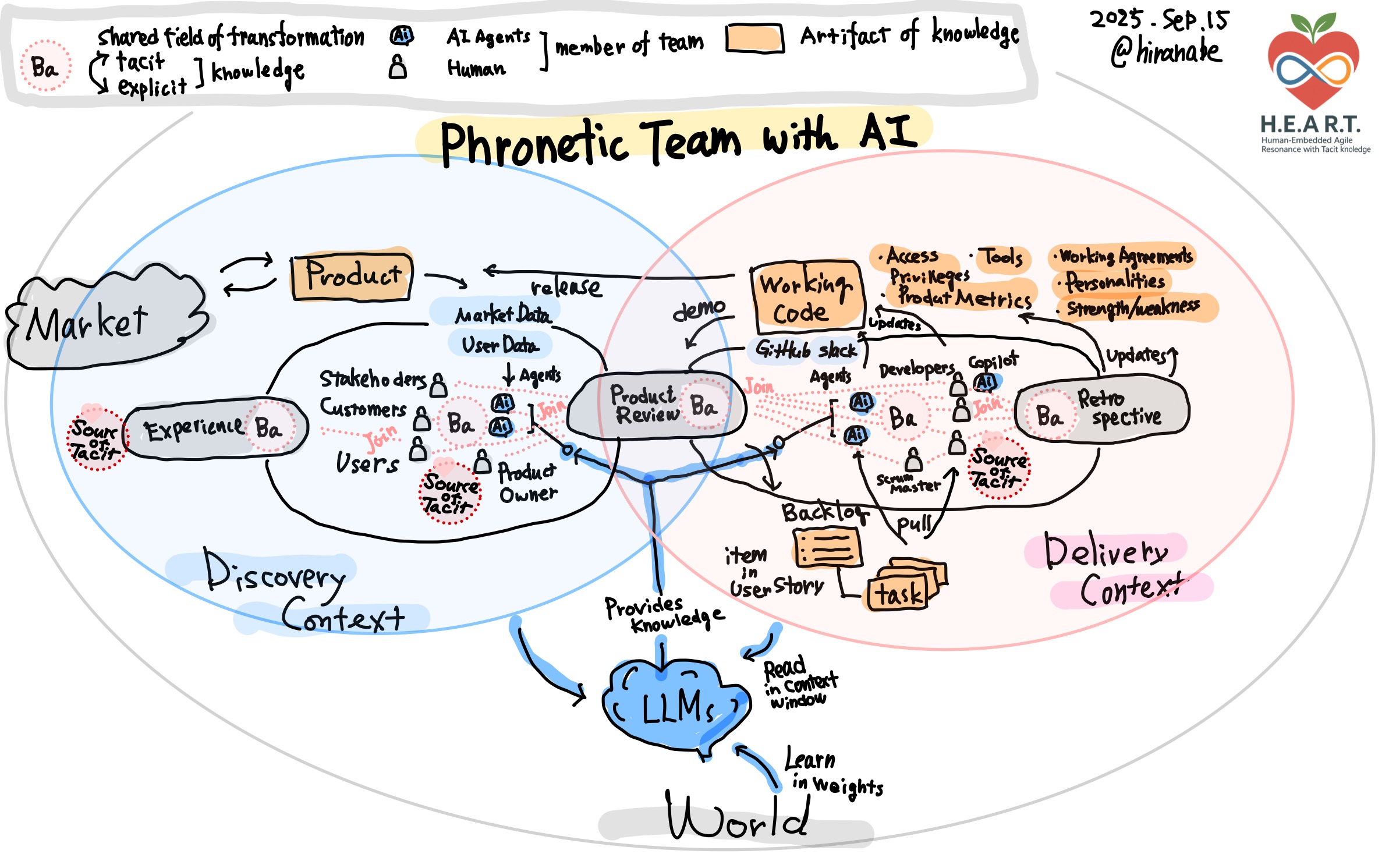
The “Ba” of Delivery Context
Team members including AI agents pull tasks and update the working codebase. Conversations among team members (including AIs) take place in person or on platforms like Slack and GitHub, which are accessible to AIs. But, humans also grasp tacit knowledge, such as the overall feeling of how the team is functioning. During Retrospective sessions, both AI-captured conversations and human-perceived feelings are made explicit. This explicit knowledge is documented and used as context input to AI as well as a shared understanding(tacit) among the team. The knowledge not only includes rules and metrics but also members personality, strength and working agreements so to communicate better.
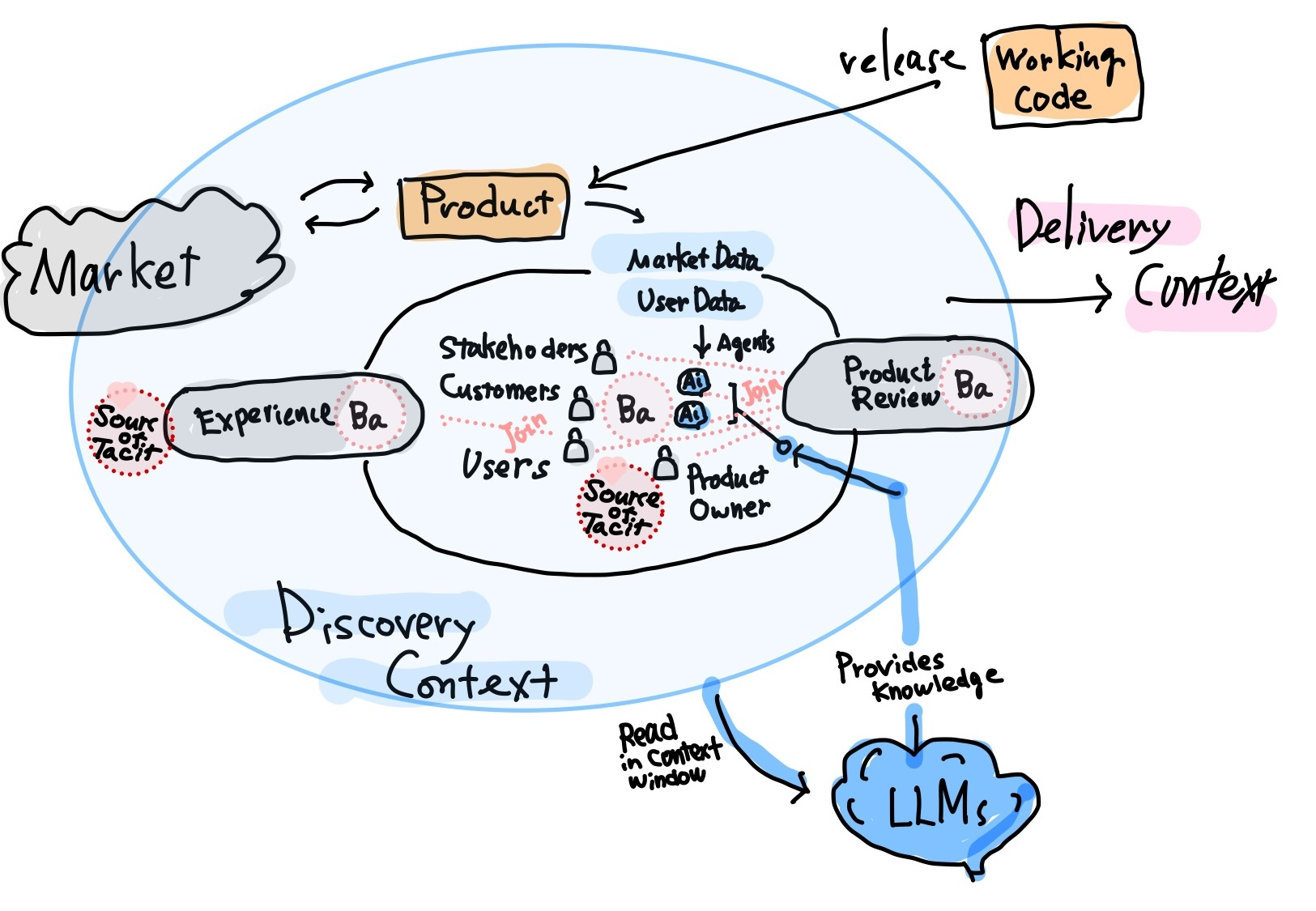
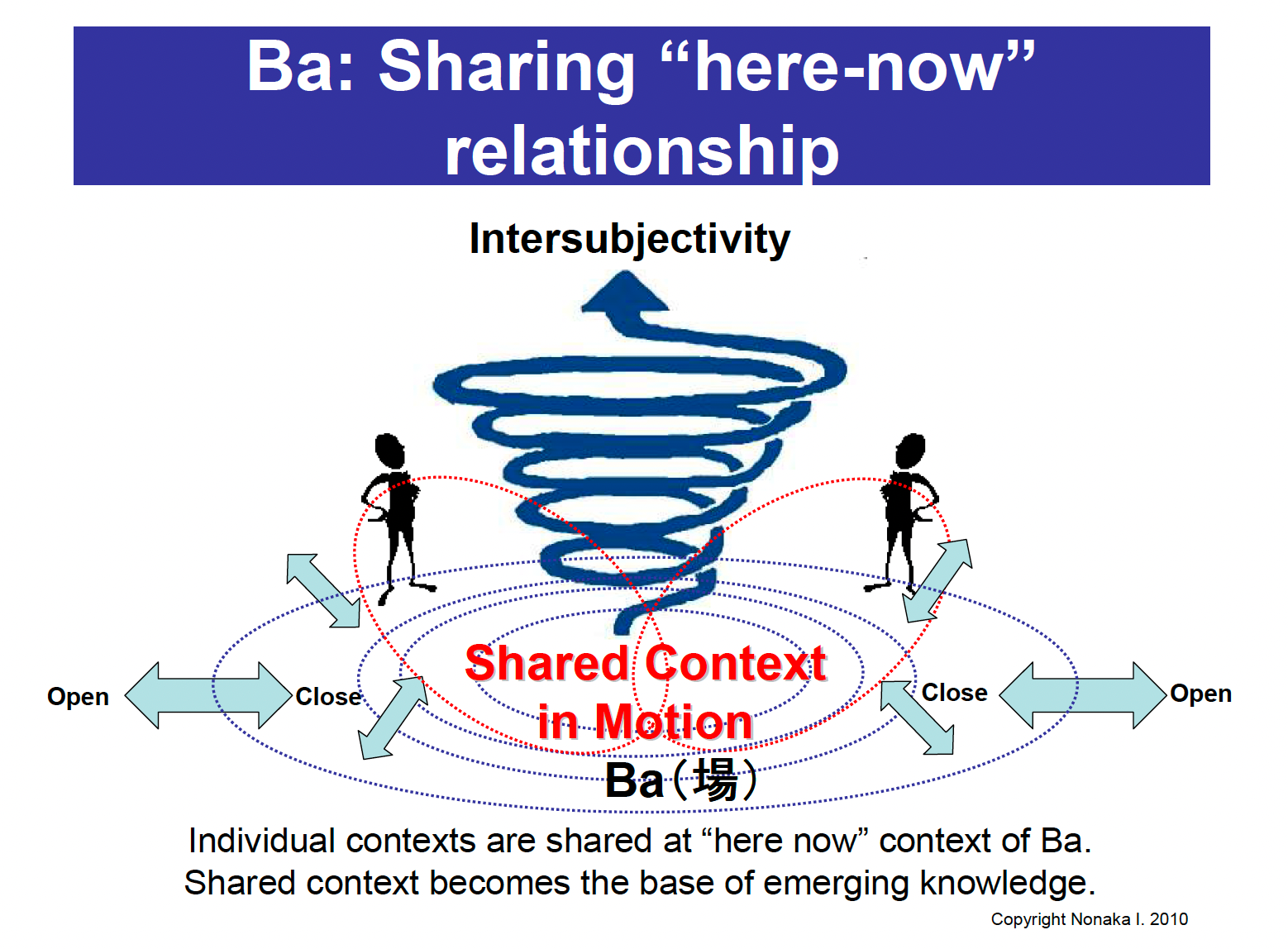
“Ba” of Discovery Context
The most important source of tacit knowledge comes from the real users of the product. Observing how they use the product, interviewing them, and empathizing with them is the crucial “Ba” for understanding the tacit feelings of “wow” and “disappointment(both tacit),” and then making them explicit. And the product also produces marketing and user activity data to be analyzed by AI. Through agents, those insights from the data are made explicit.
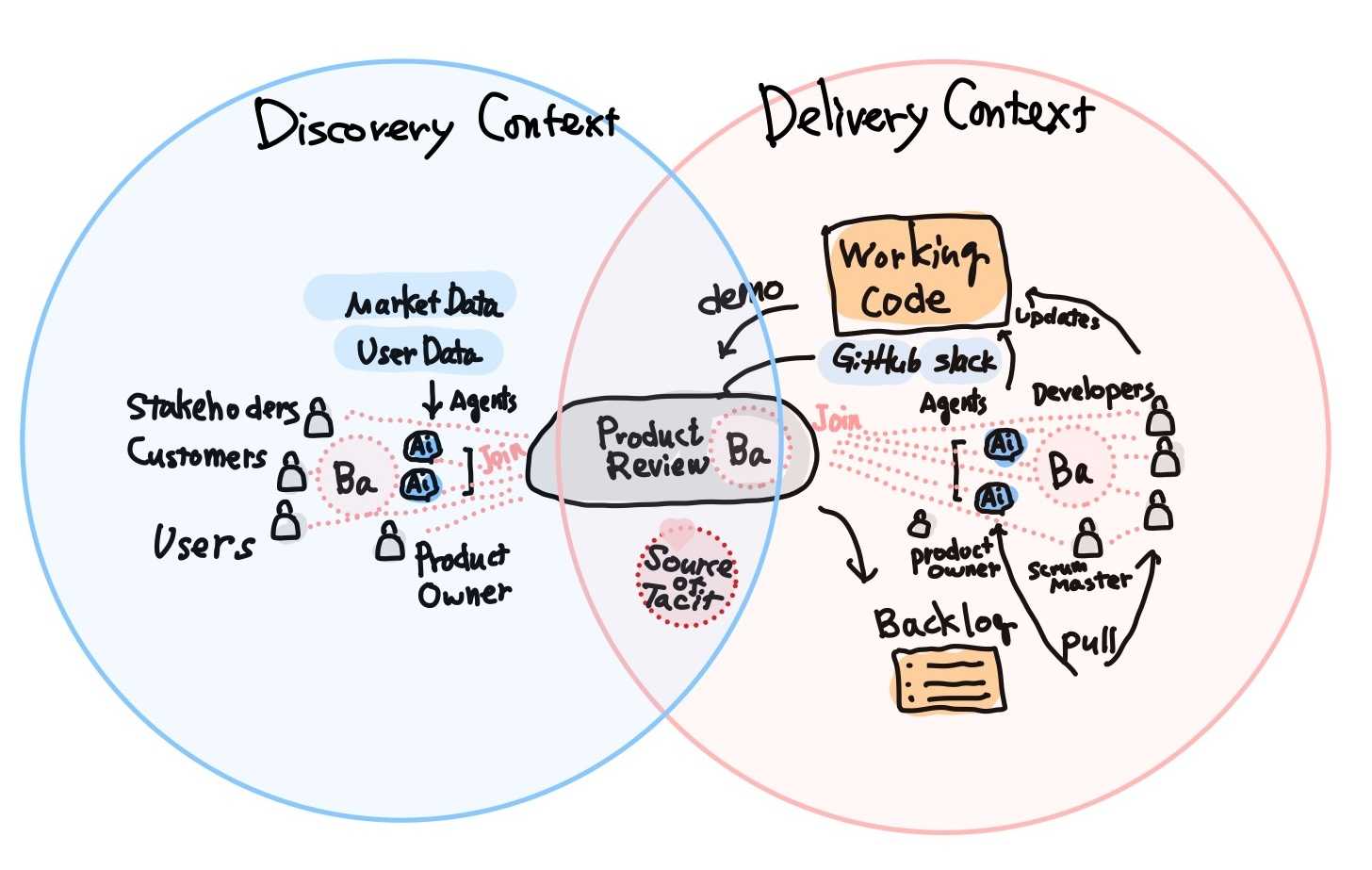
“Ba” of Product Review
Tasks in the backlog express the product’s priority for delivery. Product Review is another “Ba” where the product is demonstrated and reviewed among users, customers, and stakeholders. Here, new ideas and feedback are exchanged through both explicit and tacit knowledge sharing. Does this feature wow the user? How confident do stakeholders feel this product will penetrate the market? This involves joining the product demo (tacit), insights from user and market data analysis (explicit), and hearing the voices of real users with on-site experience (tacit). This is the “Ba” Discovery and Delivery context meet.
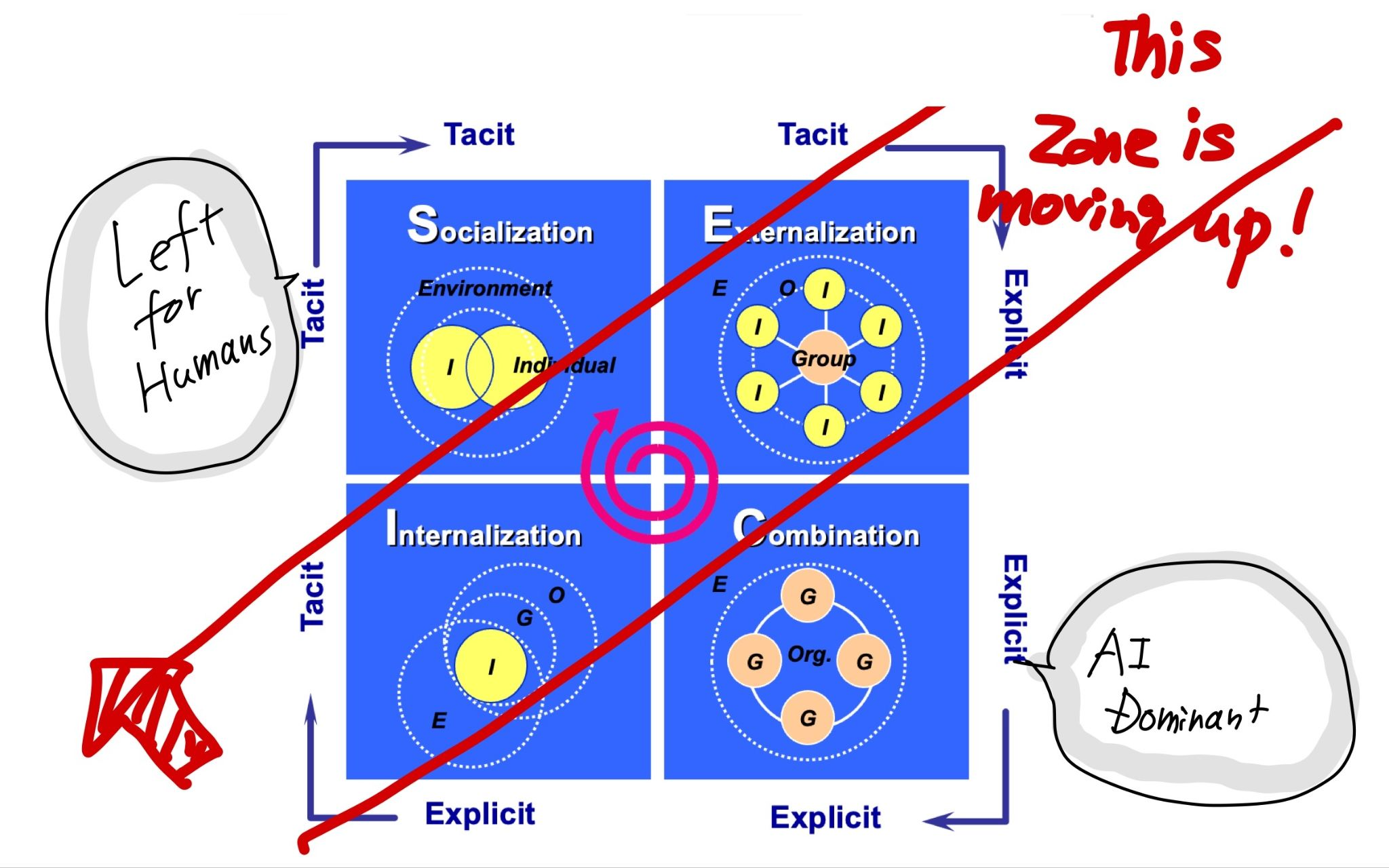
The SECI Model
The four transformation of knowledge creation in the loop.
- *S* socialization: Sharing and creating tacit knowledge through experience.
- *E* externalization: Articulating tacit knowledge to make it explicit.
- *C* combination: Editing explicit knowledge into new combined knowledge
- *I* internalizatin: Learning new knowledge in practice and internalizing it
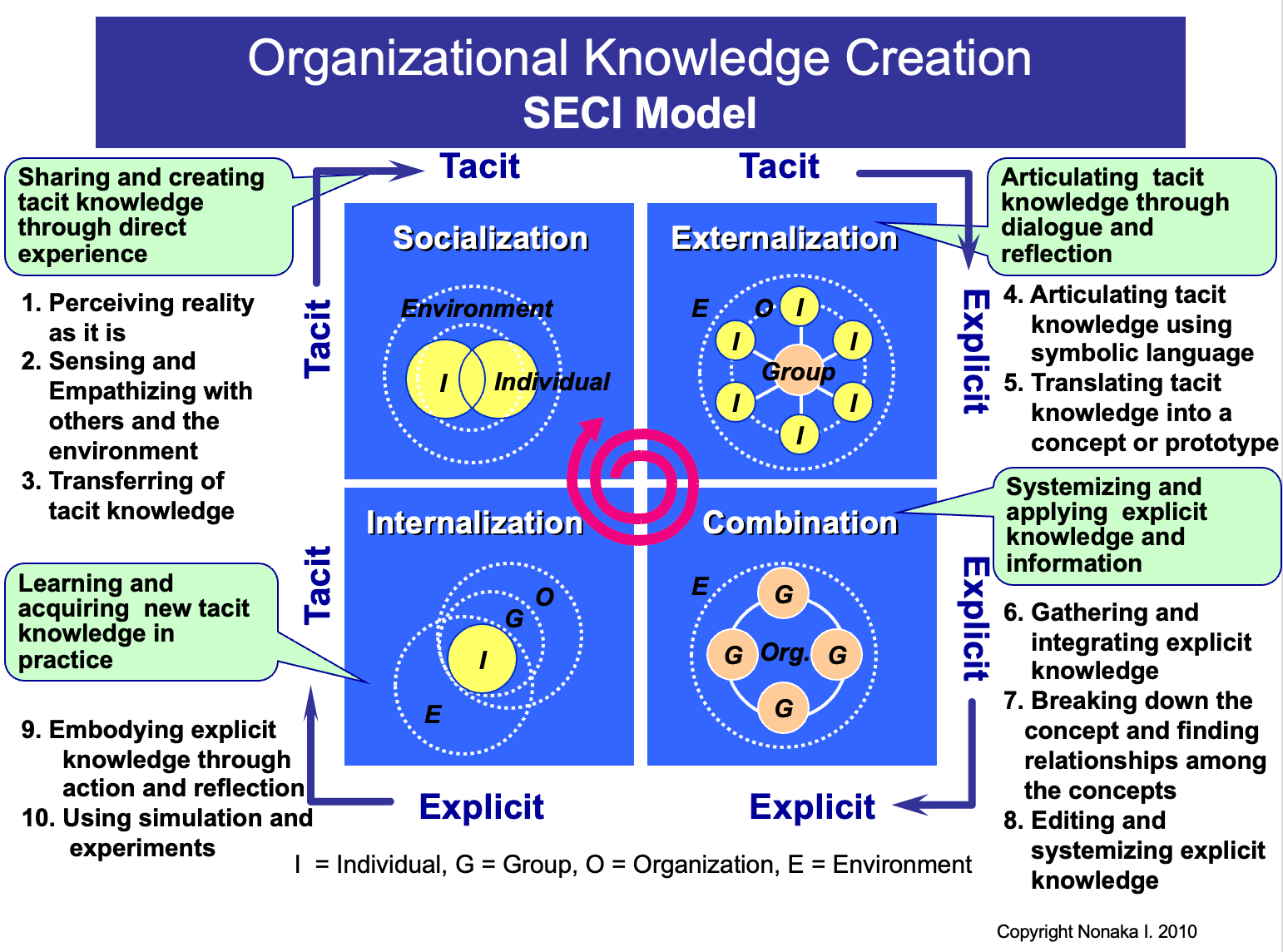
In SECI, the tacit-to-tacit knowledge transformation area remains exclusively human. But AI can effectively support the tacit-from-to-explicit areas, and it significantly excels in the explicit-to-explicit area. Now a spectrum between tacit and explicit knowledge emerges .
Shades of Tacit-ness
AI can see pictures or videos to derive insights. While AI hasn’t experienced the real physical world, but it understands it through the vast amount of data humans have created and made digitally accessible.
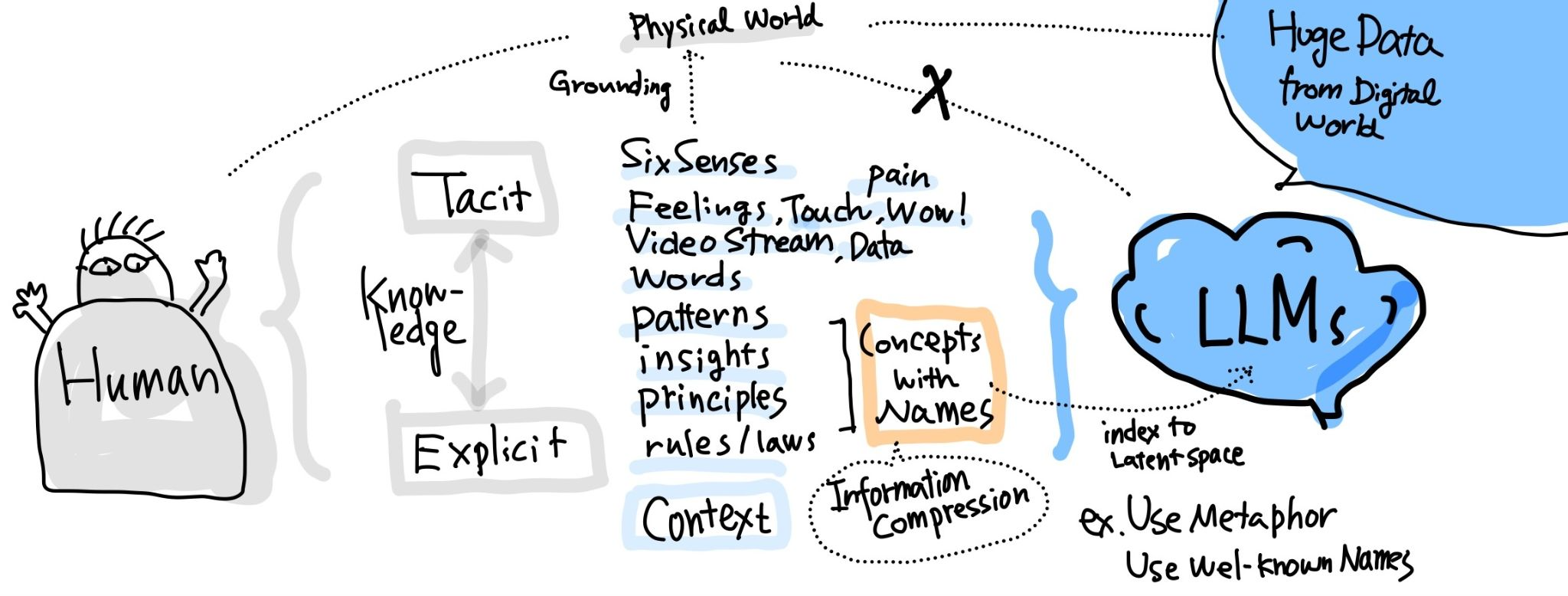
So the AI accessible/acceleratable zone is moving up !
The Third Knowledge
Aristotle categorized knowledge in to two types.
- Episteme: Universal, context-free and objective knowledge(explicit knowledge)
- Techne: Practical and context-specific technical knowhow(tacit knowledge)
Then defined the third.
- Phronesis: Experiential knowledge to make Ba where context-specific decisions occurs based on the teams own value/ethics(prudence/practical wisdom)
So I named this discussion “Phronetic Team with AI”. The word “Phronesis” also appears in Nonaka and Takeuchi book, “Wise Leadership”(HBR 2011 https://hbr.org/video/2226612848001/wise-leadership)
Here’s the whole picture of “Phronetic Team with AI” in High Definition.

 an Agile Way